Renton homeowners are asking an important question in 2026: can a property now support more units because of the city’s new RMF-2 zoning changes? The short answer is that some properties may have more development potential now, but not every homeowner in Renton is affected, and the answer depends on where the lot is located, how it is zoned, and what site constraints apply.
That is why this topic matters. In a changing housing environment, zoning updates can influence resale strategy, long-term hold decisions, redevelopment potential, and even how neighboring properties are perceived. The City of Renton’s planning materials explain that nine geographically distinct sites were proposed for rezone to RMF-2, and the RMF-2 zone allows 20 to 40 dwelling units per net acre in areas intended for multifamily infill and compatible higher-density housing. City of Renton planning materials and Renton Municipal Code RMF-2 description
For homeowners, the practical takeaway is simple: this is not a citywide blanket change. It is a targeted zoning update that may create more flexibility on specific parcels, especially near transit and within areas already designated for higher-density residential growth.

What is the new RMF-2 zoning in Renton?
RMF-2 is a Renton zoning designation for multifamily development. The Renton Municipal Code says the RMF-2 zone is intended to support multifamily housing and allow the development of infill parcels within existing multifamily areas and compatible surrounding locations, with densities ranging from 20 to 40 dwelling units per net acre.
That density range is important because it changes the conversation from a traditional single-home or lower-density use to a potentially more intensive residential use, depending on the site. In practice, though, zoning does not guarantee that a parcel can immediately be developed to the maximum theoretical density. Site layout, access, setbacks, critical areas, utilities, parking, and permit review still matter.
The City of Renton’s land use and permit pages make that clear. Property owners are expected to review zoning, development standards, and site conditions before submitting an application, and the city encourages applicants to discuss proposed development informally with Planning before filing. City of Renton land use development: and new site development guidance.
Does the RMF-2 change apply to all Renton homeowners?
No. The RMF-2 change does not apply to every residential parcel in Renton.
The official planning materials describe nine distinct rezone sites, and the background notes those sites were being changed from RMF, R-14, and R-10 to RMF-2, with all rezone sites designated Residential High Density under the Comprehensive Plan except one site with a commercial mixed-use designation. City of Renton planning materials
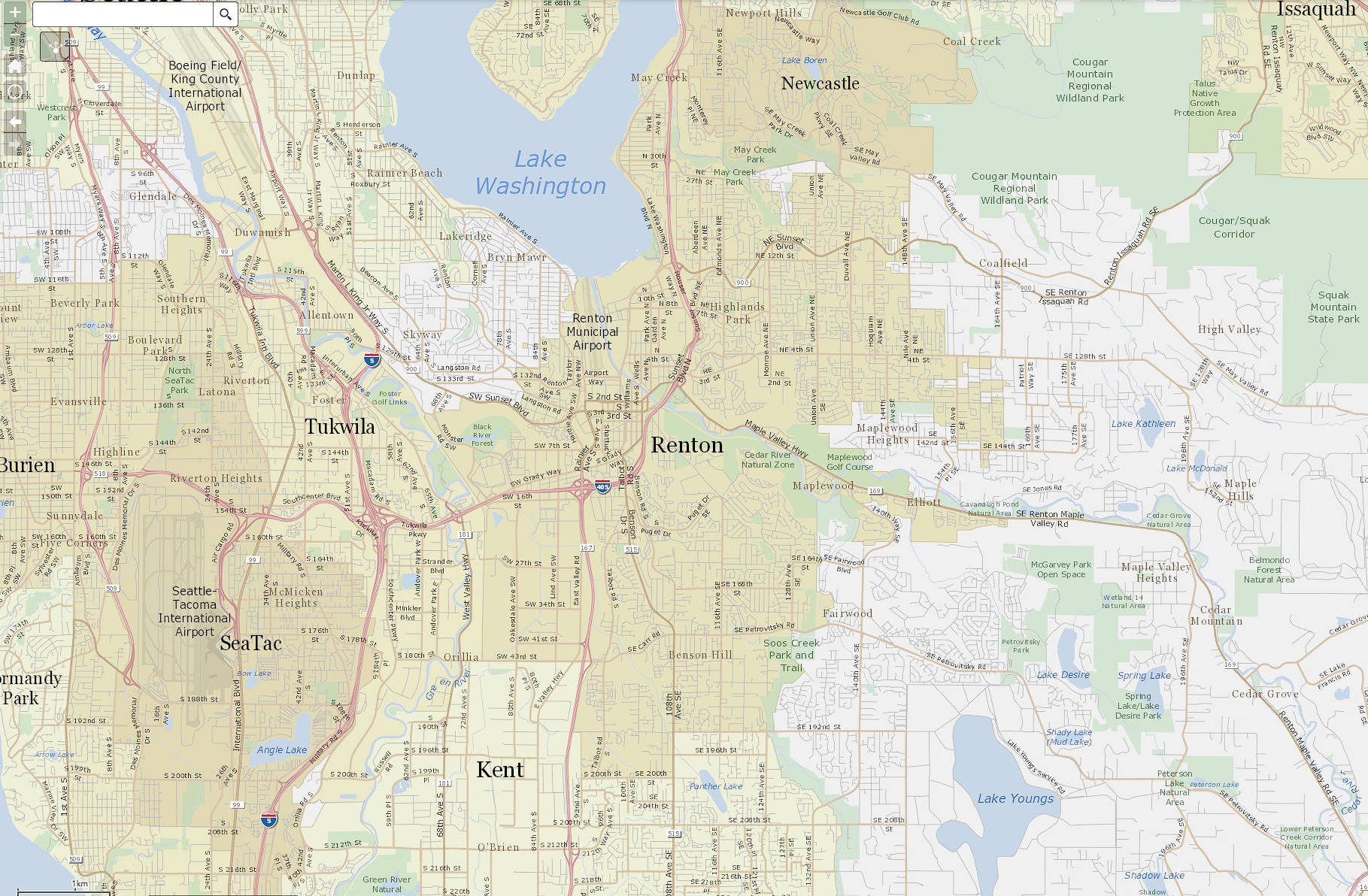
That means a homeowner first needs to confirm whether their parcel is actually within one of the affected areas. A property owner can do that through the city’s GIS tools and zoning resources rather than assuming the change applies broadly across Renton
This is one of the biggest sources of confusion with zoning news. A headline about upzoning can sound citywide, while the real effect may be concentrated on a defined set of parcels.
Can homeowners automatically build more units on RMF-2 property now?
Not automatically. RMF-2 may create more potential, but it does not remove the need for project review, permitting, and site-specific feasibility analysis.
The City of Renton’s development pages explain that applicants need to determine what is allowed for their property under the zoning code, identify critical areas, and follow the applicable submittal and review process
In plain language, a parcel may be zoned for more density but still be limited by:
lot size and lot configuration
access and driveway layout
setbacks and other development standards
environmentally sensitive areas
utility or stormwater requirements
parking and circulation design
whether an existing structure makes redevelopment practical or not
This is where homeowners need to think in terms of feasibility, not just entitlement.
Why did Renton make these RMF-2 zoning changes?
Renton’s broader planning direction has been to accommodate future housing growth and align zoning with adopted land use goals. The city’s Comprehensive Plan page describes the plan as a long-term guide for land use, housing, transportation, and growth, and a local real estate industry summary of the 2024 update says the city is planning for about 17,000 new housing units and nearly 32,000 jobs over the next 20 years.
The RMF-2 rezones also fit a more specific local strategy: allowing compact infill and higher-density housing in areas already suited for multifamily development, especially near transit and employment access. Reporting on the council action said the ordinance rezoned 75 parcels across nine sites, with the sites generally within about a mile of major transit stops.
For homeowners, the larger point is that the city is not treating housing growth as only a downtown issue. In selected locations, zoning is being adjusted to support more units where the planning framework already points toward higher density.
How is RMF-2 different from Renton’s middle housing and ADU changes?
This is a key distinction. RMF-2 is not the same thing as the citywide middle housing and ADU changes tied to state law.
On its housing legislative updates page, Renton says it must allow middle housing units within all residential zones to comply with HB 1110, with up to four units per lot in many cases and up to six when affordability conditions are met, unless higher densities are already allowed. City of Renton housing legislative updates.
That matters because some homeowners may now have two separate housing conversations affecting their property:
whether their lot is in one of the newly rezoned RMF-2 areas
whether broader middle housing or ADU rules affect what is possible on their parcel regardless of RMF-2
Those are related but not identical. RMF-2 is a targeted multifamily zoning tool. Middle housing and ADU reforms are broader code changes shaped by statewide housing requirements.
For readers following the regional policy trend, this connects with broader South King County code updates around middle housing and ADUs, especially in communities where owners are evaluating multi-generational living or small-scale rental potential.
What should Renton homeowners check before making plans?
Before spending money on design work, surveys, or major assumptions, homeowners should confirm the basics.
A practical checklist includes:
verify current zoning on the actual parcel
check whether the lot is inside one of the RMF-2 rezone areas
review development standards that apply to that zone
identify environmental or topographic constraints
ask whether access, parking, and utility service support additional units
discuss the project informally with the city’s Planning staff before pursuing a formal application

Expert Insight: What This Means Locally
For Renton homeowners, the RMF-2 changes are significant because they may create option value on some properties even if no redevelopment happens right away.
Our team sees this as a planning and strategy issue first. A parcel that now has greater density potential may attract different buyers, create a different long-term hold strategy, or change how an owner thinks about timing.
But the most common mistake is jumping from “the zoning changed” to “I can build whatever I want now.” That is rarely how zoning works in practice.
The right local approach is to separate three questions:
Was the parcel actually rezoned?
What is realistically feasible on this specific site?
Does acting on that potential make sense for this owner’s goals?
That framework usually leads to better decisions than reacting to density headlines alone.
What should homeowners keep in mind next?
The new RMF-2 zoning changes may give some Renton homeowners more flexibility, but the answer depends on parcel-level facts, not broad assumptions.
For some owners, the key opportunity may be redevelopment. For others, it may simply be understanding how zoning affects land value, neighbor redevelopment risk, or future resale positioning. Either way, this is the kind of change that rewards careful due diligence.
FAQs About Renton’s RMF-2 Zoning Changes
Can every Renton homeowner build more units now?
No. The RMF-2 change applies to specific rezone sites, not every residential parcel in Renton. A homeowner needs to verify whether their property is actually within one of the affected areas.
How many units are allowed in RMF-2?
The Renton Municipal Code says RMF-2 allows densities from 20 to 40 dwelling units per net acre. The actual number possible on a site depends on lot size, layout, development standards, and site constraints.
Does RMF-2 mean a homeowner can skip permits?
No. Zoning does not remove the need for permits, site review, and compliance with city development standards. Feasibility still depends on the parcel and the project.
Is RMF-2 the same as ADU or middle housing reform?
No. RMF-2 is a targeted multifamily zoning designation. Middle housing and ADU reforms are broader code changes tied to state housing laws and may affect more parcels citywide.
How can a homeowner check whether their property was rezoned?
The best starting point is the City of Renton’s GIS and planning resources. Homeowners can verify zoning through the city’s mapping tools and then discuss the property with Planning staff.
Helpful Resources
City of Renton Planning & Development Committee Materials
https://renton.civicweb.net/document/305498/
Official background on the RMF-2 rezone proposal and affected sites.
Renton Planning Commission Materials (PDF)
https://renton.civicweb.net/document/303907/Planning%20Commission%20-%2015%20Oct%202025.pdf
Detailed planning document describing the proposed RMF-2 rezone areas.Renton Municipal Code, RMF-2 Description
https://www.codepublishing.com/WA/Renton/html/Renton04/Renton0402/Renton0402020.html
Official zoning language explaining RMF-2 purpose and density range.City of Renton Planning Department
https://www.rentonwa.gov/Government/Departments-and-Offices/Community-and-Economic-Development/Planning
Main planning resource hub for zoning and development questions.City of Renton Current Planning
https://www.rentonwa.gov/Government/Departments-and-Offices/Community-and-Economic-Development/Planning/Current-Planning
Guidance on permit review and current planning support.City of Renton Land Use Development
https://www.rentonwa.gov/City-Services/Permit-Services/Land-Use-Development
Permit and entitlement overview for development and redevelopment.City of Renton Housing Legislative Updates
https://www.rentonwa.gov/Government/Departments-and-Offices/Community-and-Economic-Development/Planning/Washington-State-Housing-Legislative-Updates
Official page explaining middle housing and ADU-related state compliance updates.Renton GIS RMF-2 Dataset
https://gishub-rentonwa.hub.arcgis.com/datasets/RentonWa%3A%3Armf-2/explore
Mapping tool to help verify affected areas.Renton Reporter Coverage of the Rezone
https://www.rentonreporter.com/2026/02/28/renton-rezones-nine-sites-for-higher-housing-density/
Local reporting on the council vote and parcel count.Northwest REALTOR® Summary of Renton’s Comprehensive Plan Update
https://www.nwrealtor.com/2025/02/04/renton-comprehensive-plan-update-approved/
Helpful context on Renton’s long-range housing growth goals.
Questions About What RMF-2 Could Mean for Your Property?
If you own property in Renton and want help understanding how zoning changes may affect your options, our team is happy to help you think through the local implications and next steps.
📧 clientcare@perkinsnwre.com | 📱 (206) 960-4985
Honest. Effective. Reliable.